
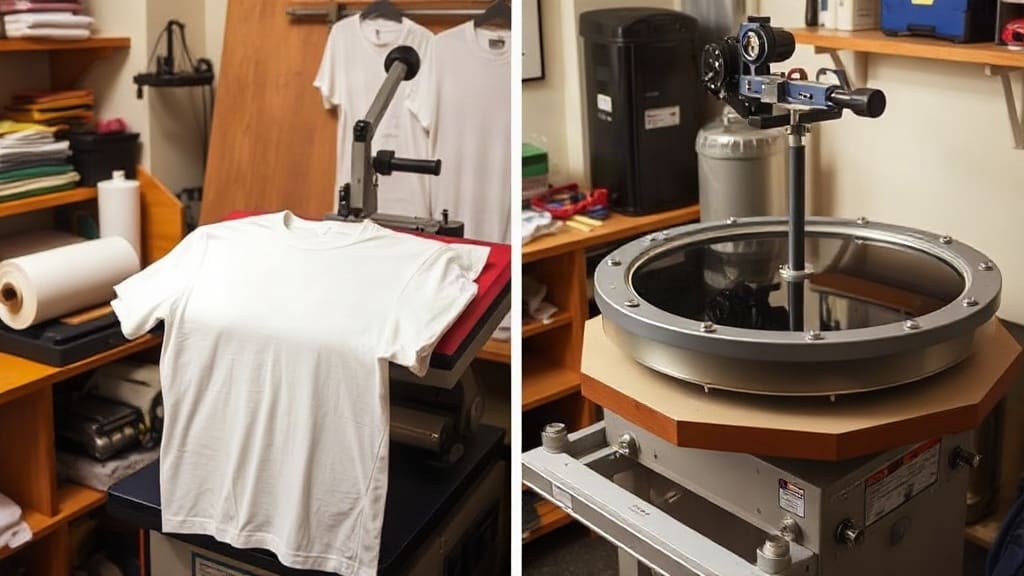
When you run a small apparel business, every decision about production methods can make or break your margins. You might have started with a heat press and a few rolls of vinyl, but as orders grow, you face a crossroads: stick with what you know or invest in something new. Two methods dominate the conversation for on-demand printing: DTF Transfers and screen printing. Both have passionate fans, but they serve different needs. After helping dozens of shop owners set up their workflows, I have seen firsthand where each method shines and where it falls short. This guide breaks down the real-world differences so you can choose confidently.
What Are DTF Transfers and Screen Printing?
Before diving into the comparison, let us clarify what each process involves. DTF Transfers, or Direct-to-Film transfers, are printed on a special film using water-based inks, then coated with a hot-melt adhesive powder. When you press them onto a garment with a heat press, the adhesive melts and bonds the ink to the fabric. The result is a soft, stretchable print that works on almost any material, including cotton, polyester, blends, and even nylon.
Screen printing, on the other hand, is the traditional method. You create a stencil (screen) for each color in your design, then push plastisol or water-based ink through the mesh onto the fabric. Each color requires a separate screen, and the ink is cured with heat. It is the go-to method for large runs of simple designs, especially on cotton t-shirts.
Cost Comparison: Startup and Per-Unit
Money talks, especially for small businesses. Let us break down the costs.
Startup Costs
Screen printing requires a significant upfront investment. You need a press (starting around $500 for a basic single-color model), screens ($20-$30 each), emulsion, ink, and a exposure unit. For a four-color design, you could easily spend $1,500 or more before printing a single shirt. DTF Transfers have a lower barrier to entry. A decent heat press costs $300-$500, and if you order transfers from a supplier, you do not need a printer at all. If you print in-house, a DTF printer runs $3,000-$8,000, but many small shops start by outsourcing transfers to avoid that cost.
Per-Unit Costs
For screen printing, the cost per shirt drops as quantity increases. A one-color print on 100 shirts might cost $2-$3 per print, while a four-color design could be $4-$5. However, for small runs (under 50 pieces), screen printing becomes expensive because you still pay for screens and setup time. DTF Transfers flip this model. The cost per transfer is relatively fixed regardless of quantity: typically $1-$3 per transfer for a full-color design, whether you order 10 or 100. There are no screen fees or minimums. For small batches or one-offs, DTF is often cheaper.
Quality and Durability
Both methods produce durable prints when done correctly, but there are nuances.
Feel and Stretch
Screen printing with plastisol ink sits on top of the fabric, giving a thicker feel. It can crack over time if stretched excessively. Water-based screen printing is softer but less durable. DTF Transfers are known for their soft hand and elasticity. The ink stretches with the fabric, making them ideal for performance wear and stretchy materials. If you are printing on polyester jerseys, DTF is a clear winner.
Washability
Properly cured screen prints can last 50+ washes. DTF transfers, when applied correctly, also last 50+ washes. The key is following the instructions: correct temperature, pressure, and time. I have seen DTF prints fail because the user did not pre-press the garment to remove moisture or used too little pressure. When done right, both are durable.
Workflow and Versatility
How does each method fit into your daily operations?
Design Complexity
Screen printing charges per color. A design with 10 colors requires 10 screens, which is costly and time-consuming to set up. DTF Transfers handle unlimited colors at no extra cost. Photographic images, gradients, and fine details are easy with DTF. If you offer custom designs with complex artwork, DTF saves you hours of screen prep.
Turnaround Time
Screen printing involves setup: burning screens, mixing ink, and aligning colors. For a small run, setup can take longer than printing. DTF transfers are ready to press as soon as you have them. You can press a shirt in under a minute. For on-demand orders or last-minute requests, DTF is faster.
Material Compatibility
Screen printing works best on cotton. Polyester requires special inks and can be tricky. DTF Transfers adhere to cotton, polyester, blends, and even treated nylon. This versatility means you can offer more products without changing your process.
When to Choose DTF Transfers
Based on my experience, DTF is the better choice if:
- You print small batches (1-50 pieces) regularly.
- Your designs have many colors or fine details.
- You work with polyester or stretchy fabrics.
- You want to avoid screen setup and chemical handling.
- You offer on-demand or personalized products.
When to Choose Screen Printing
Screen printing still has its place:
- You have large orders (100+ pieces) of simple designs.
- You want the lowest possible cost per unit for bulk.
- You prefer the classic feel of plastisol on cotton.
- You have the space and budget for a full shop setup.
Hybrid Approach: Using Both
Many successful shops use both methods. They screen print large orders of team uniforms and use DTF Transfers for sample pieces, small orders, and complex designs. This hybrid approach maximizes efficiency and profit. For example, a customer might order 200 shirts with a simple logo: screen print. But if they also want 10 shirts with a detailed sponsor logo, DTF handles that easily.
Frequently Asked Questions
Can I use DTF transfers on dark garments?
Yes, DTF transfers include a white ink layer that makes colors pop on dark fabrics. You do not need a separate white underbase like with screen printing.
Do DTF transfers require special pretreatment?
No, DTF transfers do not require pretreatment. However, pre-pressing the garment to remove moisture and wrinkles is recommended for best adhesion.
How long do DTF transfers last?
With proper application and care, DTF transfers can last 50+ washes. Turn garments inside out and wash in cold water to extend life.
Is DTF printing cost-effective for large orders?
For very large orders (500+), screen printing may be more cost-effective due to lower per-unit ink costs. But for orders under 100, DTF is often cheaper.
What equipment do I need to start with DTF transfers?
You need a heat press and a source of DTF transfers. You can order transfers from a supplier or invest in a DTF printer if you want to print in-house.
Choosing between DTF Transfers and screen printing comes down to your business model. If you value flexibility, speed, and low startup costs, DTF is likely your best bet. If you specialize in large runs of simple designs, screen printing may still win. Many shops thrive by offering both. Evaluate your order volume, design complexity, and budget, then test both methods. Your customers will thank you for the quality, and your bottom line will thank you for the efficiency.