
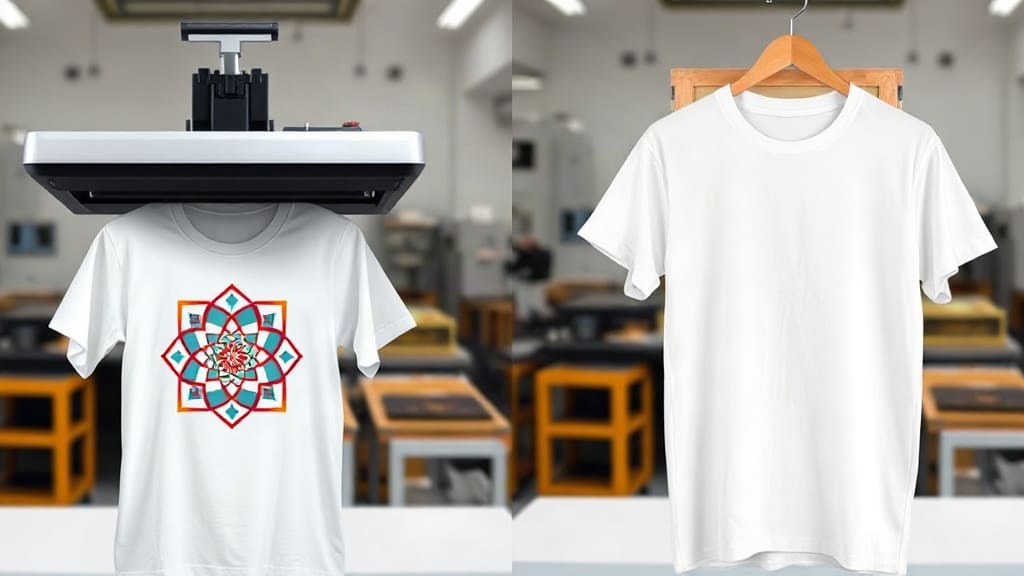
When you're starting or growing a custom apparel business, one of the biggest decisions you'll face is choosing the right printing method. You've probably heard a lot about DTF transfers and screen printing, but which one is truly better for your needs? As someone who has experimented with both methods and worked closely with printers, I can tell you that the answer isn't always straightforward. It depends on your budget, order volume, and the kind of designs you want to create. In this guide, I'll break down the strengths and weaknesses of each approach, so you can make a confident choice that aligns with your business goals.
Understanding DTF Transfers
DTF (Direct to Film) printing is a relatively new technology that has taken the custom apparel industry by storm. It works by printing your design onto a special film, applying adhesive powder, and then heat pressing it onto the fabric. The result is a vibrant, durable print that can be applied to a wide range of materials, including cotton, polyester, and blends.
One of the biggest advantages of DTF transfers is their versatility. You can produce full-color designs with intricate details, gradients, and even photographs without worrying about color separation or setup costs. This makes it an excellent choice for small businesses that need to offer a wide variety of products without tying up too much capital.
Benefits of DTF Transfers
- Low startup cost: Unlike screen printing, you don't need expensive screens, emulsions, or exposure units.
- No minimum order: You can print a single shirt if you want, making it perfect for custom orders and samples.
- Easy color matching: Because you're printing digitally, you can match any Pantone color exactly without mixing inks.
- Quick turnaround: Once your design is ready, you can print and press a shirt in minutes.
Understanding Screen Printing
Screen printing has been around for decades and is the go-to method for high-volume orders. It involves creating a stencil (or screen) for each color in your design, then using a squeegee to push ink through the screen onto the garment. While the setup can be time-consuming and costly, the per-unit cost drops significantly as order quantities increase.
Screen printing is known for its durability. The ink sits on top of the fabric and can withstand numerous washes without fading or cracking, especially when using plastisol inks. For simple designs with few colors, screen printing remains the most cost-effective option.
Advantages of Screen Printing
- Excellent durability: The thick ink layer is highly resistant to wear and tear.
- Cost-effective at scale: As your order size grows, the price per piece becomes unbeatable.
- Specialty inks: You can use glitter, metallic, puff, and other textured inks that are difficult to replicate with DTF.
Cost Comparison: DTF Transfers vs Screen Printing
Cost is often the deciding factor for many businesses. Let's break it down:
| Cost Factor | DTF Transfers | Screen Printing |
|---|---|---|
| Setup | None (digital file) | $50-$200 per screen |
| Per-unit cost (small orders) | Low | High |
| Per-unit cost (large orders) | Moderate | Low |
For a one-off custom shirt, DTF transfers are clearly the winner. You can produce a single shirt for around $5-10 in materials, whereas screen printing would require paying for a separate screen for each color, which could easily exceed $100 before you even print the first shirt. However, if you're ordering 500 shirts with a one-color logo, screen printing will likely be much cheaper per shirt. Many businesses find that screen printing is more economical for orders over 50 pieces, while DTF is better for short runs and high-detail designs.
Durability and Quality: Which Lasts Longer?
When it comes to durability, screen printing has a long-standing reputation. The ink is thick and bonds well with the fabric, especially on 100% cotton. However, modern DTF transfers have improved significantly. With proper application and quality materials, DTF prints can withstand 50+ washes without significant fading or cracking. The key is to use high-quality adhesive powder and follow the correct heat press settings.
In terms of feel, screen printing tends to have a slight texture, while DTF prints have a soft, smooth feel that many people prefer. If you're printing on performance wear like polyester jerseys, DTF is actually better because screen printing inks require special additives to bond with synthetic fibers.
Turnaround Time and Flexibility
Speed is crucial in the custom apparel business. With DTF transfers, you can print on demand and ship orders immediately. There's no need to wait for screens to be burned or ink to dry. This allows you to offer same-day rush services, which can be a huge selling point for your customers.
Screen printing, on the other hand, has a longer lead time, especially for multi-color designs. You need to create screens, set up the press, and run a test print before the actual production. This makes it less suitable for last-minute orders or frequent design changes.
Which Method Is Right for Your Business?
The answer depends on your business model. If you're a small print shop or a home-based business that handles custom orders, DTF transfers offer incredible flexibility and low startup costs. You can easily test new designs without risking a large inventory. On the other hand, if you already have a steady stream of large orders, screen printing can provide higher profit margins. Many successful businesses combine both methods: using DTF for small orders and complex designs, and screen printing for bulk orders of simple designs.
Consider your target market and the types of products you sell. If you focus on custom one-off shirts for events or online marketplaces like Etsy, DTF is your best bet. If you're supplying branded merchandise for companies or sports teams in large volumes, screen printing might be more suitable.
Conclusion
There's no clear winner in the DTF transfers vs screen printing debate; it's all about context. DTF transfers shine in flexibility, ease of use, and color complexity, making them ideal for small to medium-sized businesses. Screen printing offers unbeatable durability and cost efficiency for bulk orders. By understanding your own production needs and customer demands, you can choose the method that maximizes your profits and keeps your customers happy. Don't be afraid to use both, as many successful printers do, to ensure you can handle any order that comes your way.
Frequently Asked Questions
Can DTF transfers be used on dark shirts?
Yes, unlike white toner printers, DTF printing doesn't require a white underbase because the film itself carries the white ink. This makes it perfect for dark fabrics, and the colors stay vibrant.
How many washes can a DTF transfer last?
With proper application, DTF prints can last over 50 washes without significant cracking or fading. Always follow the recommended heat press temperature and time to ensure maximum durability.
Is screen printing cheaper than DTF for small orders?
No, screen printing is generally more expensive for small orders due to setup costs. DTF transfers have no setup, making them cost-effective for one-off or low-quantity jobs.
Can I do DTF transfers at home?
Yes, you can set up a DTF printing system at home with a printer, heat press, and a few accessories. It's a more accessible option than screen printing, which requires a lot of space and ventilation.
Which method produces better color accuracy?
DTF transfers offer excellent color accuracy because they are digitally printed, allowing for precise color matching. Screen printing relies on spot colors and can have slight variations due to ink mixing.