
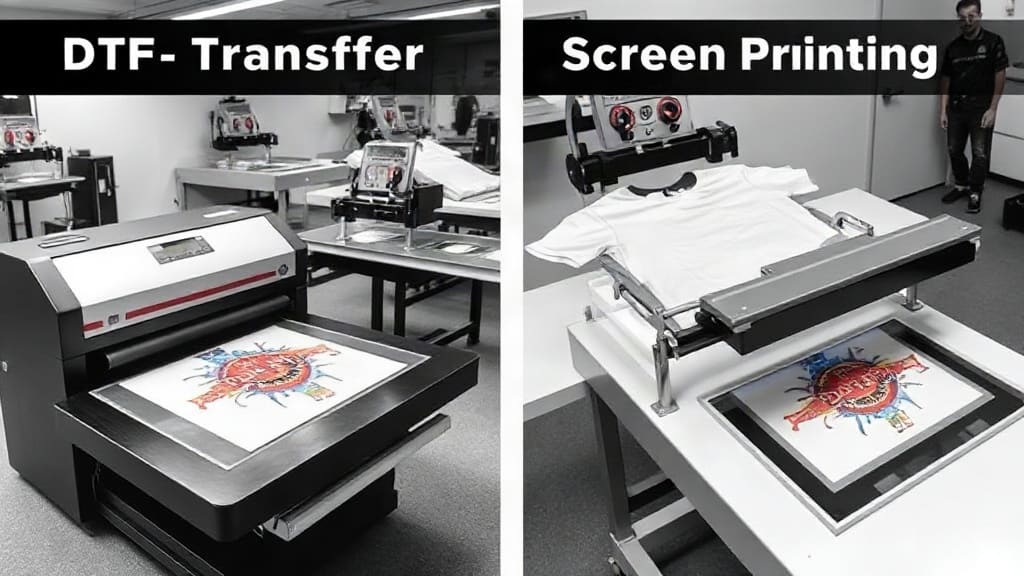
When you're running a custom apparel business, choosing the right printing method can make or break your success. For years, screen printing was the go-to technique for bulk orders. But now, DTF transfers are shaking things up. If you're trying to decide between the two, you've come to the right place. In this guide, we'll dive deep into the pros and cons of each method, compare costs, quality, and practical considerations, and help you decide which one fits your business model best.
What Are DTF Transfers?
DTF (Direct to Film) transfers involve printing a design onto a special film, applying adhesive powder, and then heat-pressing that film onto a garment. This method is relatively new but has gained massive popularity because of its versatility and ease of use. With DTF transfers, you can print vibrant, detailed designs on a wide range of fabrics, including cotton, polyester, blends, and even nylon. The process is simple: print, apply powder, shake off excess, cure, and then press.
What Is Screen Printing?
Screen printing is a traditional technique where ink is pushed through a mesh screen onto the fabric. Each color in the design requires a separate screen, making setup time and cost higher. However, once the screens are ready, printing is fast and cost-effective for large quantities. It's known for producing thick, durable prints that withstand many washes. But it's limited when it comes to detailed or multi-colored designs, and it works best on flat, cotton-based fabrics.
Cost Comparison: Initial Investment vs. Per-Unit Cost
Cost is often the deciding factor. Let's break it down.
Initial Setup Costs
For screen printing, you need screens, emulsion, exposure units, and a darkroom. Each color requires a screen, so a 4-color design will need 4 screens. This can cost anywhere from $20 to $50 per screen, plus artwork and setup fees. If you're outsourcing, expect a setup fee per design, which might be $50-$100.
DTF transfers, on the other hand, require a DTF printer, film, powder, and a heat press. A DTF printer can be expensive, but if you're using a service like DTFProHub, you don't need to buy the equipment. You just order your transfers, and they arrive ready to press. The initial investment for equipment is much lower if you start with a transfer service.
Per-Unit Costs for Small vs. Large Orders
Screen printing becomes cost-effective when you order in bulk. The per-unit price drops significantly for orders over 50 or 100 pieces. For small runs, the setup fee makes it expensive.
DTF transfers are ideal for small to medium orders. Since there's no setup fee, you can order one shirt or a hundred. The per-unit cost is a bit higher than screen printing for large quantities, but it's much lower for small runs. If you're just starting out or dealing with custom orders, DTF transfers are more budget-friendly.
Quality and Detail: Which Produces Better Prints?
Quality is subjective, but there are clear differences.
Color Vibrancy and Detail
DTF transfers use a white underbase, which ensures colors pop on dark garments. The printing process allows for high-resolution details, gradients, and photo-like images. You can achieve almost any color, including white and neon shades, without worrying about color separation.
Screen printing also produces vibrant colors, but it's limited by the spot color process. Gradients are difficult to reproduce, and fine details might not hold up well. You need to create halftones, which can be time-consuming.
Texture and Hand Feel
Screen printing results in a thicker ink layer that sits on top of the fabric. Some people like this classic feel, but it can be stiff, especially on heavier prints. DTF transfers have a softer hand feel, because the adhesive layer is thin and flexible. The print feels more like part of the fabric.
Durability and Washability
Both methods produce long-lasting prints if done correctly. Screen printing is known for its durability, especially with plastisol inks. DTF transfers, when properly pressed, also withstand many washes. However, DTF prints may crack or fade over time if not cured correctly. But with high-quality materials, DTF transfers can last just as long as screen printing.
Production Speed and Flexibility
Time is money, especially in the fast-paced world of custom printing.
Turnaround Time
Screen printing requires time for screen creation, setup, and cleanup. If you have a rush order, it might not be feasible. DTF transfers can be produced quickly, and if you use a service, you can order today and have it shipped tomorrow. The pressing process itself is fast, taking just a few seconds per garment.
Print-on-Demand and Small Batches
DTF transfers shine when it comes to print-on-demand and small batches. You can print one-off designs or test new products without worrying about minimum order quantities. This is perfect for Etsy sellers, online stores, or anyone who wants to offer personalized items.
Design Changes and Iterations
With screen printing, changing a design means creating new screens, which is costly and time-consuming. DTF transfers allow you to make changes easily. You can upload a new design and order a small batch to test it. This flexibility is a huge advantage for businesses that frequently update their products.
Fabric Compatibility and Application
Different garments require different approaches.
DTF Transfers on Various Fabrics
One of the biggest advantages of DTF transfers is their versatility. They adhere well to cotton, polyester, blends, and even performance fabrics. You can use them on t-shirts, hoodies, tote bags, denim, and more. This opens up a wide range of possibilities.
Screen Printing Limitations
Screen printing works best on 100% cotton or high-cotton blends. Polyester can be tricky because the ink doesn't bond well, and you need special inks or a lower cure temperature. Also, screen printing on textured fabrics like fleece can be challenging.
Environmental and Safety Considerations
More businesses are thinking about sustainability.
DTF transfers use less water and produce less waste compared to screen printing, which involves washing screens and cleaning up ink. DTF powder is a plastic-based adhesive, but many companies are working on eco-friendly options. Screen printing inks can contain PVC and phthalates, though there are eco-friendly alternatives.
If sustainability is important to your brand, DTF transfers might be a better fit, but you should research the specific materials used by your supplier.
When to Choose DTF Transfers Over Screen Printing
Here are some scenarios where DTF transfers are the clear winner:
- You're a small business or startup with limited capital.
- You need to fulfill small orders (1-50 pieces) frequently.
- Your designs are intricate, with many colors or gradients.
- You want to offer a wide range of products without stocking inventory.
- You value speed and flexibility for custom orders.
On the other hand, if you have a steady stream of large orders (100+ pieces) with simple designs, screen printing might be more cost-effective in the long run.
How to Get Started with DTF Transfers
If you're leaning toward DTF transfers, the easiest way is to work with a professional service like DTFProHub. You can upload your designs, choose the size and quantity, and receive ready-to-press transfers. All you need is a heat press, which is a worthwhile investment if you plan to make this a regular part of your business.
When you receive your transfers, ensure your heat press is set to the correct temperature and pressure. Pressing instructions are usually included, but a general guideline is 320°F (160°C) for 10 seconds with medium pressure. Always test on a sample garment to get the best results.
Frequently Asked Questions
Can DTF transfers be used on dark garments?
Yes, DTF transfers are excellent for dark fabrics because they include a white underbase. This ensures that the colors remain vibrant and opaque, just like screen printing.
How many washes can DTF transfers withstand?
High-quality DTF transfers can last for 50 washes or more when properly applied and cared for. To maximize durability, wash the garment inside out in cold water and avoid using bleach or fabric softeners.
Is DTF printing more expensive than screen printing for bulk orders?
For very large orders (500+ units), screen printing might be cheaper per unit. However, DTF transfers are more affordable for small to medium quantities, and the lack of setup fees means you can order exactly what you need without excess inventory.
Do I need a special printer for DTF transfers?
Yes, DTF printing requires a specialized printer that uses DTF inks and CMYK + white configuration. However, you don't have to purchase one if you use a transfer service. Many businesses start by ordering transfers from a provider and later invest in their own DTF printer as they grow.
Can I use DTF transfers on polyester fabric?
Absolutely. DTF transfers work well on polyester blends and even 100% polyester. This makes them ideal for sportswear and performance apparel, where screen printing often struggles.
Final Thoughts
Both DTF transfers and screen printing have their place in the custom apparel industry. Screen printing is tried-and-true, especially for large runs with simple designs. But if you value flexibility, vibrant detail, and the ability to serve customers with low order quantities, DTF transfers are a game-changer. They offer a low barrier to entry, exceptional quality, and a wide range of applications.
As technology advances, DTF transfers are becoming more accessible and affordable. Whether you're a seasoned printer or just starting, it's worth exploring this method. With the right partner, you can elevate your offerings and meet your customers' demands with ease. So, weigh your options carefully, consider your business goals, and choose the method that aligns with your needs.